Sunday, August 31, 2008

THE EINSTEIN-WITTGENSTEIN CONDENSATION

I’m dining with a physicist friend. As ever, this is a most delicious and physical experience. He’s one of those truly devoted people who is enthusiastic about his math and physics. I’ve always found this kind of enthusiasm most enticing, because it’s so generous. We have tandoori chicken with wine provided for by the Bohr Institute. It’s a Châteauneuf-du-Pape 2005. The combination is quite amazing – also because my friend insists on listing all the things that Libras have in common: as we are born in October we find ourselves swooning over good smell and music. I can’t accommodate my friend’s wish to listen to Mozart’s Requiem – a top favorite of mine – having recently moved some favorite CD’s managed to get lost or misplaced – but I play instead Edita Gruberova and Yoshikazu Mera, some other Mozart in between and round if off with Glen Gould playing not Bach.

It strikes me that what I find entirely alluring about scientists – when they really are that – is the fact that they live completely according to Hamlet’s philosophy: not only are they convinced that there’s more between heaven and earth – astrologically speaking – but they also don’t mind sharing odd complementarities. By the time we get to the Pu-Erh tea – which my friend knows a lot of things about, and which he brought along – we have been going from Aretino’s Lewd Sonnets to David Ruelle’s book Chance and Chaos – especially the chapter: “The true meaning of sex” - and Frank Close’s Lucifer’s Legacy: The Meaning of Asymmetry. Although I’m neither into zodiac signs, and symmetry only gives me a headache, I manage to respond most interestingly: the belief that there’s more between heaven and earth can only be formulated by someone who is already convinced that two plus two is not only four, but also something else.

Wittgenstein intercedes: “Knowledge in mathematics: Here one has to keep on reminding oneself of the unimportance of the ‘inner process’ or ‘state’ and ask: “why should it be important? What does it matter to me?” What is interesting is how we use mathematical propositions.” My friend tells me that one of his favorite lines – one I once delivered in another context – has become this one: “symmetry in theory only screws up the smartest question: who the fuck cares?” I think of that while Mozart is blowing the oboe.

At this late hour, I’m reminded of a favorite Einstein quote: “nothing happens until something moves.” I secretly see myself winning the newly instituted Nobel prize for entangled disciplines: physics, math, and literature. If Wittgenstein and I know nothing, and we like to keep it that way so that we can learn some more, Einstein and I like to move it. Especially things that we’re uncertain about. Good physicists understand that. Mathematicians follow suit by priming the pump, and poets fall in silent dawn condensing scent links. Bash(o)ing haikus.

Thursday, August 28, 2008

BACK TO BLACK


Back at work, I sit and listen to talks about budgets. Budgets meant to cover ideas. Poems by Alisdair Gray come to my mind. Especially from his Old Negatives book. I want to kick myself into attention, but I remember that I don't wear mountain boots anymore. I'm back to black, Roman sandals, and the habitual desire to be a tall man. But I get exasperated as I realize that I can't quite make my re-gained sense of cosmopolitanism after summer fit this framework. The heel-less sandals ruin my equation. Next month I'll be having tea with head of states, or some such. I try to anticipate my femme fatale look for the event. Spying on myself. I think I'll go for high-heels, put my brain in a basket, and let my senses blacken the night. I'll call the emerging contours spike geometry. A negative of thinking lust.

Meanwhile, Alisdair Gray for you - all in capitals, as he likes it. Words on stilettoes.


STATEMENTS BY AN UNCEILINGED BLOOD

MIND IS A SKY-MACHINE

KEPT STABLE BY THE BREEZE OF BREATH

A RACKETY SLIPSHOD THING OF GUT AND NERVE,

PATHCED TUBE AND TWISTED CABLE.

THE ENGINES OF THE HEART AND LUNGS SUSTAINE

ITS WINGS ABOVE THE BASEMENT OF A VOID.

BOXED IN ITS SKULL,

BRAIN IS THE ANEROID BY WHICH WE GAUGE

A LEVEL THROUGH THE PRESSURE OF OUR PAIN

AND STRUGGLE HARD FOR SOME

DEGREE OF STABLE EQUILIBRIUM.

Sunday, August 24, 2008

FANTASY

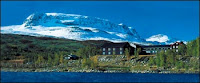
It was hard to come down from the mountains this year. I was so close to ditching everything and getting myself a job there, that I even surprised myself. I thought of one of those jobs that fascinated Kafka – he always fancied being a waiter; the perfect position for someone interested in following closely other people and their conversations while assuming an incognito status. Back in Denmark, I imagined answering my boss: “sorry sir, it will never happen again; I will remember henceforth to put the soap in the bathroom.” Of course, the job I’m talking about is cleaning the cabins up high on some plateau in Norway.

On the way back to Roskilde, I made a stop in Aalborg for a lecture. One of those wonderful survey lectures that takes you from Shakespeare to Nella Larsen in 6 hours. I anticipated it, because I thought that it would make me think nothing other than put me in an admiring mood for all that creative genius that has managed to survive throughout centuries. But as the two lecturers kept emphasizing one word, “transgression,” I got ideas. All the authors discussed, it seemed, managed to create what they did, not because they followed rules, but because they transgressed them. Nothing new in that. However, the thought that I got was rather interesting. It hit me as paradoxical that the people who have been rather disturbed, both mentally and socially, (think of Blake or Virginia Woolf and all the others worth mentioning between them), were also the people who were unusually capable of trusting. And it’s not only their readers that they trusted. Ultimately they trusted themselves to be able to receive the gift of their own creativity. For why does one create, in the end? Surely not because one wants to be remembered? Good writers don’t fall for stupid assumptions.

As the reality principle kicked in, all I could think about – after allowing the mountains to mess with my head – was that I should get serious about how far I should stretch my elastic bottom lines. It occurred to me that it would indeed be very transgressive if I approached the most boring, yet also the most prestigious publishing house, and convince its editors that my writing is the most exiting shit they’ve ever seen since Blake. For a while, that should keep me away from the temptation to compare my own paradox: Norway is a fantasy, but stems from real desire – to that of a supertask: La Norvège, mon amour, Le-shanah ha-ba-a b'Yerushalayim.

Monday, August 18, 2008

WHATEVER EROTICS

In Norway, the prevalent word is whatever. Whatever ails me, intellectually or physically, the good thing about Norway is that it always enables me to say, whatever. Here the only thing that matters is Norway itself. That’s why I return every year, and every year the obligatory 3 weeks tend to get longer. Of course, I plan to retire here, on top of a mountain. (Although sometimes I’m tempted by the idea of retiring on top of Lincoln Center in NYC – but that is very unlikely, given my money situation).

Today, in spite of sunny weather and the call of the plateau, I go for more whatever. I decide to get a classical massage. (They say that the Norwegian masseurs are some of the best in the world, and I believe everything where Norway is concerned). Unlike the other day at the fantastic spa at Vestlia Hotel, today I get a most beautiful specimen of a male Norwegian to do the work. He doesn’t ask me to empty my mind, like the other one did, and this suits me fine. But it occurs to me that the bloody French pursue me again. Now, as soon as the masseur’s hands hit my body, the theme melody in the classical movie Un Homme et Une Femme (1966) spirals through my head. Quite awful actually, but then I did always think that nobody was better at acting in the 60s than Anouk Aimée. I ask the masseur what he thinks of my body. He tells me that I’m not his easiest customer. No matter how hard he presses I never say stop. Of course not, I think, I didn’t pay a fortune for caresses. Whatever, I further think, the whole thing is beautiful. His body smells good, and his hands are warm. I close my eyes. Oh, they are already closed.

Back at the cabin in the woods, good literature awaits me. Raymond Federman sent me an erotic email. I respond in kind. One simply can’t have enough erotic texts around written by intelligent people. Or is that a contradiction in terms? I have license from Raymond to use whatever parts of his texts, including his body. So I do. Ever So devotionally. The poem he sent me has this stanza highlighted:

“Oh yes, I remember, I remember, I said, reaching for you in the dark, so that once again we could roll in the grass and slowly fall asleep into each other's essence.”

Raymond, my “gladiator, musketeer, paratrooper, French lover [once upon a time], the last of the Mohicans, an old fart”, whatever we do, we must keep loving the idea.

Friday, August 15, 2008

POLITICS OF SELF-DISCLOSURE


For Ana


The rainbow over the top of the mountain leaves me with the feeling that my lips are red and lush. Sounds come out of my mouth, as I take in the green, the purple, and the black. The words are those of my dead mother: “it’s not the end of the world that you can’t figure out what two plus two is.” I’m not good at counting. She was. This is her speaking as a mathematician. As the logician that she also was, she would say: “enlightenment while walking the path to the top is possible if and only if you wear good boots.” As the physicist that she was too, she would say: “create atmosphere!” I read my lips in the lake. Oh, they are so beautiful! They are still red. But whose language do they speak? I disclose myself to create a private language that is not my mother’s. Self-disclosure creates private knowledge. I like the knowledge that a private language affords me: my mother only read one novel in her life. She liked it so much that she was convinced that another novel would ruin her first experience. Hence she never read another. She was a trained logician, did I say? I think the thoughts of the mountain. High on the plateau, I’m always sorry. Morbidity grasps me and my mother is not there to save me. Philosophy does. Even though it’s stupid. “Death is the only intellectual property we have exclusive rights to,” I instruct myself. But in the strangeness of being, I cry.

§

Tuesday, August 12, 2008

SET THEORY IN THREE ACTS

ACT I

XIX

If you so wish to construe this, I’ll say this
only: the Jew is not beholden
to forgiveness, of pity. You will have to
go forward block by block, for pity’s sake
irresolute as granite. Now move
to the next section.
(Geoffrey Hill, The Triumph of Love)

XXXV

Even now, I tell myself, there is a language
to which I might speak and which
would rightly hear me;
responding with eloquence; in its turn,
negotiating sense without insult
given or injury taken.
Familiar to those who already know it
elsewhere as justice,
it is met also in the form of silence.
(Geoffrey Hill, The Triumph of Love)

~~~
ACT II


In the Faust legend, Faust is able, with Mephistopheles’ help, to take nocturnal voyages, flying through the air to other times and places and summoning scenes and personages from them to his study. He is permitted to gaze on them – to have them as sights – but other interaction is impossible, including, explicitly, speech. In the face of knowledge, Faust is silenced.
Sheherazade’s position is the reverse of this. “Be silent then, for danger is in words.” (V.i.27), says Marlowe’s Faust to some companions before whom he is exhibiting Helen of Troy. But for Sheherazade danger lies in silence, death hovers at the edge of dawn on the horizon of light when all stories come to an end, inscribing her as well. Where Faust sells his soul for knowledge, Sheherazade saves her life by offering it.
(Lyn Hejinian, “La Faustienne”, from The Language of Inquiry)

Authority over being is thus dispersed, not because of the boundlessness, but in the boundlessness. We don’t – as writers or as persons – go beyond “all limitations” and “all boundaries” – we enter and inhabit them. Faced with the notorious gap in meaning, we may ask, “What should we do?” But we already know what to do. And this knowing what to do is neither derived from, nor does it produce guidelines – either prescriptive, proscriptive, or even descriptive. It is, rather, intrinsic to living in context.
(Lyn Hejinian, “Reason” from The Language of Inquiry)

~~~
ACT III

A little knowledge is dangerous. So is a lot.

(From the TV program Eureka, 2006)

So, one has to make up one’s mind and have both, a little knowledge and a lot. Both this and that.

(Camelia Elias, on top of a mountain in Norway, 2008)

But who says that either one of us has a winning strategy? The law of the excluded middle says so.
(Jaakko Hintikka, The Game of Language, 1983)

Really?
(Anonymous, c/o Curia)

§

Monday, August 11, 2008

INSTIGATIONS

The evening walk, consisting of a small climb up the mountain path behind the cabin – the sky from there is fabulous – ends with a visit to the beautiful bar at Hotel Vestlia. I order a cognac, my favorite, Hennessy Paradise, in the middle of Henry the VIII’s masturbating on big screen in front of three Norwegians in their 70s. The film, The Tudors, featuring hunk Jonathan Rhys Meyers, is on TV. I gape for a while at Rhys Meyer’s talent. He does a good job. The scene is very erotic and I get aroused. I get my nose in the cognac, take a sip – Henry has not yet had his orgasm – and try to register the Norwegian faces. They don’t flinch. I look at myself and think that it’s rather appropriate that I wear my underwear. Nothing fancy though. It’s my Devold dual layer wool set that I use for yoga and evening walks. As I watch the rest of the film, two conflicting thoughts arise. One from the Ecclesiates: “This too shall pass”. The other from Lynn Hejinian: “Make it go with a single word. We” Am I making any sense? The anticipation of the pleasure of making sense, this too is erotic. Norway and I do not tell stories. We instigate them.


Sunday, August 10, 2008

SENSE LIST


Why Norway for 3 weeks every year? Try this:


1. First you get a luxury cabin that comes with absolutely everything in it.

2. In the mornings you get up and go on the porch to smell the grass – get your nose in it, and don’t cheat.

3. What you do between coffee and lunch is not that interesting though depending on whom you are with, the potential to have it either passionately or domestically is there.

4. Then you take a drive – the most favorite for me is not along the fjord, as much as that is praised, and for good reason, but on a mountain plateau.

5. You pick a mean slope and up you go to the top. 50 degrees inclination upwards is pretty good.

6. When you get to the top, past the stones, you get hit by the smell of small flowers, such as chamomile (surprise, surprise). You don’t have to prostrate yourself – you will fall flat on your nose automatically. You are ready to die, as the smell envelops you.

7. When you come to your senses, you pose a philosophical question, which you also answer immediately – you did come to your senses.

8. You go down.

9. At the bottom, if you are in Geilo, you hit Dr. Holms Hotel and have a Laphroaig – they never have any weissbier, the idiots…

10. Then you eat at the Hallingstuene under the able guidance of celebrity chef Frode Aga. Make sure to eat the kid liver, and try to guess what the red-beet garniture is made of. My nose is dead sure: cherry juice, aniseed, lime, and lemon. This gets corroborated by the head waiter – who, however, has to ask the chef first. The wine selection at Hallingstuene is famous, so no need to mention more.

11. You go back to the cabin; are surprised that you’re still alive, so you start to smell the grass and the trees some more.

12. You have a sauna. You give your nose a rest and let your body immerse itself in itself.

13. You ask your partner to give you a foot massage for three hours afterwards. He feels privileged to do it.

The day ends with a national anthem: Long Live the Empire of the Senses!

Friday, August 8, 2008

NOBLESSE OBLIGE - L'ESPRIT EN LAVANDE


I lie under lavender drops today, at the foot of the mountain, rather than on top of it. It’s spa time. It rains water drops outside. In my mind I add their weight to the oily ones. Some mixture. A tiny Norwegian gives me a massage. Gently. I’m used to the Romanian way of giving massages at spas. There, the hands are not only very big and heavy, but if you ask the masseuse to jump on you, she or he will never think it odd. It’s always a done deal. The Norwegian tells me to empty my mind – but how can I? It’s clear to me that she doesn’t know much about physics. I feel like telling her to press her body hard against mine, as that would do it. I imagine concretizing the lack of weight by conjuring up sharp images. Swords, to be more precise. One such image befalls me in the form of a question: why is the work of Michel Zévaco (1860-1918) not very known here? His popular cloak and dagger novels, the series Les Pardaillan, used to make my day in early youth. The one called Pardaillan et Fausta (the 5th volume) was a favorite. Fausta forced Pardaillan into total submission after she gave him a major headache with her intricate plotting to reconstruct Charlemagne's empire. Of course, as it goes in such novels, the man prevails. Pardaillan outsmarted her and he gave her a headache in return – a marvelous one at that. But she was good at handling heads, both his and hers. It’s not often that women are portrayed as both clever and beautiful in such novels. Even Zévaco couldn’t get away with it. He didn’t call his protagonist Angelica. We all get the picture. Fausta did get prime time in the 3rd volume, but she had to pay for it. The title of that volume is Fausta Vaincue. In Romanian that translates to Fausta Invinsa.

So, I’m thinking of Fausta, who made Pardaillan’s body tremble. I begin to feel the effects of such thinking. Under the weight of my protagonists’ desires, my massage beings to work. The Norwegian asks: "does it work?" - "What works?" I ask in return, still thinking of Fausta who felt obliged to take upon herself the burden of answering all the questions. I delegate the task to my body: "the body feels good," I answer on its behalf. She’s happy with that. Odd, I think – didn’t she just ask me to do something about the mind – empty it, let kenosis exercise its right to counter acts of perfect submissions? Why doesn’t she want to know about that?


Sartre, in his autobiography, Les Mots, claims that his imagination is constantly suspended between the famous tragedian Corneille and knight errant Pardaillan. Oh la la ! Noblesse oblige, n’est pas? Mais quois? L’amour ou la mort?

Wednesday, August 6, 2008

LOVE AFFAIR


I’m in Norway for three weeks. As every year. On the way up here, crossing the sea by boat, I sit next to a family with three kids at the restaurant. Their 8-month-old is definitely hitting on me. I know that look. Although he doesn’t face me, he constantly turns about 90 degrees and stares at me with what I take is a mixture of desire, curiosity, and admiration. I swear I do nothing to invite that gazing. Precisely because I do nothing, his parents wonder why the baby insists on sitting in what I take must be a very uncomfortable position. So the mother checks me out. Then the father sizes me up. Watching other people is obviously contagious, as their 7-year-old girl also looks intrigued. Only the 5-year-old thinks it’s normal to have the whole family look my way, so he does it too but in a nonchalant, rather than tense way. I decide to give them a reason to stare, so I ally myself with the baby. I make a face at him. He goes wild. This goes on for a while. The baby likes me and I also like him. But as I can only take so much mutual sympathy, I decide to go for some desert. The girl follows me. As I pass the 100-meter-long counter full of cakes, I notice that she takes nothing from it. I turn to her and ask her: “don’t you want anything?” She makes a negative sign. “Then why are you following me?” I continue. She smiles and shrugs.

This reminds me of a conversation I once had with my sister, who is a psychologist, upon her observing my encounters with her son who is now 13. She told me that kids have a special kind of radar that picks up on vibrations especially of the disinterested type. She is convinced that kids can read body language better than adults, and that what they can read where I am concerned is that I’m not really interested in them – which fascinates them. I don’t go ‘giddy, giddy,’ and I don’t laugh at them when they mispronounce words. I also don’t let them win in cards if we play together. “Over my dead body,” I tell them. My sister has also noticed that I can only take about one hour around kids before I go to other planets. Jupiter, to be more precise. Yet according to her, it is in fact Jupiter that does it for kids, as they all want to follow. Where I often go, my sister claims, is an abstract place that only kids can sense and relate to. I like this thought. Somehow it has something to do with both being here and not being here.

On top of the mountain in Norway, I try to think about the law of the excluded middle. This foundational principle in logic states that something must be either A or not A, but not both. The ‘both’ is the middle position which is excluded by the law. I read these lines in a book:

1.
The law of excluded middle is a venerable old law of logic.
But much can be said against its claim that everything must be either true or false.

2.
The idea that women cannot think logically is a not so venerable old stereotype. As an example of thinking, I don’t think we need to discuss it.

3.
Lawn of Excluded Middle plays with the idea of a woman as the excluded middle. Women and more particularly, the womb, the empty center of the woman’s body, the locus of fertility.

4.
This is not a syllogism.

5.
This is a syllogism.

6.
Poetry: an alternate, less linear logic.

7.
Wittgenstein makes language with its ambiguities the ground of philosophy. His games are played on the Lawn of Excluded Middle.

8.
The picture of the world drawn by classical physics conflicts with the picture drawn by quantum theory. As A.S. Eddington says, we use classical physics on Monday, Wednesday, Friday, and quantum theory on Tuesday, Thursday, Saturday.

9.
For Newton, the apple has the perplexing habit of falling. In another frame of reference, Newton is buffeted up toward the apple at rest.

10.
The gravity of love encompasses ambivalence.

(Rosmarie Waldrop, On Lawn of Excluded Middle)

At high altitude, ALL activities are Sunday activities, ALL affairs are of love, and ALL love is of interplanetary traveling.

Sunday, August 3, 2008

PAN PAJAMAS

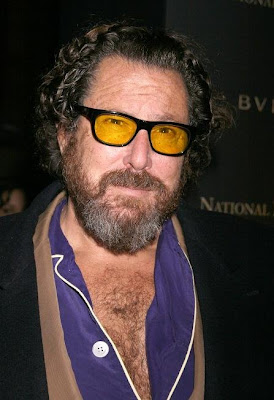
Phony. This is the word that I like and dislike. In the age of information originality is not original. Take Julian Schnabel’s walking around in pajamas – because his young wife designed them nicely, he claims – every time there is a vernissage he has to show up to. Of course he got the idea from Matisse who was a real pajamas lover. Although I never wear pajamas – I’m into naked bodies – I’m thinking of getting one from amazon.com. Marilyn Monroe pajamas – which makes me think about that famous picture of her reading Ulysses, and which nobody can understand. I’m sure that if she wore pajamas instead of hot-pants, people would stop going round in the hermeneutic circle. The unreality of some things is just mind boggling. I’m gonna go read Roger Penrose’s latest The Road to Reality that has everything in it, from fractions to fiber bundles. If Julian, Henri, Marilyn, Roger, and myself go bundling I’m pretty sure that we’ll hit a spot of knowledge. Fractions by night. Information can go fuck itself.


Saturday, August 2, 2008

MATH STRIKES AGAIN

At the ISSEI conference on language and the scientific imagination I came very close to figuring out what the meaning of life is. I had been happily anticipating a theory panel and especially two of the talks in it: one about poetic language in Badiou and the other on the nature of mathematical language in Claude Chevalley.

At the end of the day the whole panel turned out to be a bizarre occurrence and we went from brilliant papers to disastrous ones – the latter both in content and in presentation.

The presenter on Badiou ended his paper with a response to a mathematician that dropped in just before the last question was posed: something about the relationship between set theory and the possibility that poetry produces no knowledge. His response was that mathematics is all about ontology. I felt the Homerian /Simpsonian voice in me rise: “thaaaaat’s interesting.” Said the mathematician: “how can you say that about mathematics? Surely, if and when considering its ontological form we must first also consider its relation to semantics.” Before an answer was offered, he furthermore asked, addressing the audience: “what is this panel on?” – Nobody answered. The organizer was jet-lagged and looked like she fell from the moon. Then he asked, addressing the poetry guy: “what was your paper on?” – No answer was given here either. We all had our thoughts.

Then the Chevalley scholar presented a paper that was not written in any form. It was not prepared in any note form either, and it was delivered entirely by way of translation. Chunks of texts coming from 9 articles written by Chevalley in the 30s were translated ad hoc, and on the spot, and without flinching. This last affair took one hour instead of 20 min.

What was interesting was that according to him, or rather should I say, according to Chevalley, mathematics is all about existentialism. “Thaaaaat’s even more interesting,” I said to myself. The itinerant mathematician also had a question here: “abstraction is good, but semantics is better; how can an existential crisis, which is mathematics itself, be rendered in purely abstract form?” The answer was that insofar as pure mathematics is a walk on a tightrope, the existential crisis arises when you realize that you don’t want to live there – on the tightrope, that is.

A counter question was posed by the one who delivered the long talk/translation: “but what do you need semantics for, when you deal with pure form?” Right on, I thought, though I couldn’t help also thinking that indeed we can’t use pure formalism for anything whatsoever if we want to live it, or live with it. (We need hermeneutics, stories, just like the ones I’m delivering now, for all to interpret, dismiss, laugh at, or curse, if one fancied it. So, I’m not even sure that thinking of pure form is or can remain an act of the imagination – assuming that imagination can bypass semantics.) In response to the question, the mathematician got up, gave the Chevalley guy his card, and said: “send me your paper, and we’ll talk”. But before the other one had a chance to tell him: "there is no paper," the mathematician was gone. We all had our thoughts. Mine were these: “compared to these guys, I’m hardly the most eccentric, or mad, or interested in abstractions merely for the sake for confusing others.”

Now I’m tempted to ask my math friends, what say you? Is math ontological or existential?

Where I’m concerned and where math and life is concerned I deduced this arithmetical axiom derived from the above mentioned panel:

Fate (a constant) + will (fluctuating between strong and weak) + relevance = nobody gets out of here alive.

The moral: I hate moral philosophy.
The lesson: formally, we can still say whatever crosses our minds (the interesting way: regardless of consequences; the economist way: think of cost/benefit before you open your mouth)
The teaching: go on counting – not what we get out of it, but what we put into it.

A quote springs to mind:

"Mathematicians are like lovers. Grant a mathematician the least principle, and he will draw from it a consequence which you must also grant him, and from this consequence another.
---Bernard Le Bovier Fontelle"